

Before You Start Troubleshooting
If your laptop keyboard is not working, do not replace it immediately. In many cases, a restart, a disabled keyboard setting, a driver problem, or a temporary Windows or macOS issue is responsible. Work through these checks in order, starting with the quickest ones.
1. Restart the laptop: Use Restart rather than simply closing the lid. A restart can clear a temporary driver or input-service problem.
2. Disconnect accessories: Unplug USB docks, keyboards, hubs, and other peripherals. A faulty accessory can sometimes interfere with input.
3. Try the keyboard’s Fn/lock combination: Some laptops have a keyboard-lock or function-lock shortcut. Check the symbols printed on your function keys and your model’s manual.
4. Test an external USB keyboard: If the external keyboard works, the operating system is receiving keyboard input and the built-in keyboard becomes the main suspect.
5. Check Windows accessibility settings: On Windows, open Settings > Accessibility > Keyboard. Turn off Filter Keys, Sticky Keys, or other features you do not need.
6. Reinstall the keyboard driver on Windows: Open Device Manager > Keyboards, uninstall the affected keyboard device, then restart. Windows can redetect it.
7. Test before Windows/macOS loads: Use BIOS/UEFI or a manufacturer’s hardware diagnostic. If the built-in keyboard fails there too, hardware is much more likely.
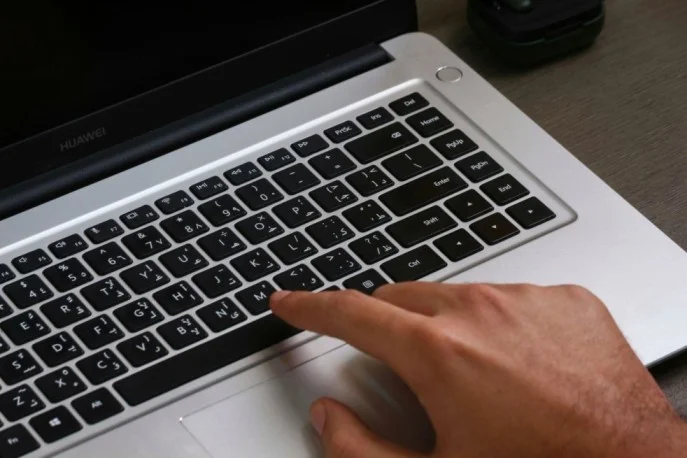
Quick Diagnosis: Software or Hardware?
| What you see | Likely direction | First action |
| Entire built-in keyboard is dead | Software or hardware | Restart, external keyboard, then BIOS/UEFI test |
| Only a few keys fail | Debris, liquid, worn keys, keyboard matrix | Inspect/clean safely and test outside the OS |
| Built-in keyboard works in BIOS but not Windows | Windows, driver, settings, or software | Reinstall driver and check accessibility/update history |
| Built-in keyboard fails in BIOS/diagnostics | Hardware | Stop repeated software fixes; arrange service |
| External keyboard also fails | System-level software, USB, firmware, or OS issue | Check settings, updates, USB ports, and Safe Mode |
Why Is My Laptop Keyboard Not Working?
When people search why is my laptop keyboard not working, the answer is usually one of a handful of causes: a temporary operating-system glitch, disabled accessibility or keyboard settings, a corrupted or incompatible driver, a firmware issue, debris under keys, liquid exposure, a loose internal connection, or a failed keyboard assembly. The important distinction is whether the keyboard fails everywhere or only inside the operating system.
Start With the Symptom
If the keyboard on laptop not working problem affects every key, begin with the external-keyboard and pre-boot tests. Only a few keys are affected, inspect those keys and consider physical damage. If the problem began immediately after an update, concentrate on drivers, updates, and System Restore on Windows. This symptom-based approach prevents unnecessary part replacement.
Windows Laptop Keyboard Not Working: Step-by-Step Fixes
For a windows laptop keyboard not working problem, use the following sequence. You can perform most steps with a mouse or touchpad; an inexpensive external USB keyboard is also useful if the built-in keyboard is completely dead.
Check Keyboard and Accessibility Settings
Open Settings > Accessibility > Keyboard. Turn off Filter Keys, Sticky Keys, and other options that are not needed. Also verify that the correct keyboard language and layout are selected under Windows language settings. A layout mismatch does not normally make every key dead, but it can make certain keys produce unexpected characters.
Reinstall the Keyboard Driver
Right-click Start and open Device Manager. Expand Keyboards, right-click the affected keyboard device, and select Uninstall device. Restart the laptop. Windows should detect the keyboard again. If there is more than one keyboard entry, do not randomly remove unrelated devices; use the hardware information and symptoms to identify the relevant device.
Update or Roll Back the Driver
If the problem started after an update, open Device Manager, open the keyboard device’s Properties, and check the Driver tab. If Roll Back Driver is available and the timing matches a recent driver change, rolling back can be appropriate. Otherwise, install current Windows updates and use the laptop manufacturer’s official support page for model-specific BIOS, chipset, and input-related updates.
Try Windows Safe Mode
Safe Mode starts Windows with a limited set of drivers and services. If the keyboard works normally in Safe Mode but fails during a normal boot, a third-party utility, startup application, driver, or software conflict becomes more likely. Remove or disable recently installed keyboard customizers, macro tools, remapping utilities, or system-tuning software one at a time.
Use System Restore When the Failure Is Recent
If the keyboard worked normally before a recent system change and a restore point exists, System Restore can return Windows system files and settings to an earlier state. It is not a replacement for backing up personal data, and it will not repair a physically damaged keyboard.
Keyboard Not Working Laptop: Check BIOS or UEFI
Restart the laptop and use the manufacturer’s displayed startup key to enter BIOS/UEFI. Common keys include F2, F10, F12, Delete, or Esc, but the exact key varies. If the built-in keyboard responds there, the hardware is at least capable of sending input before Windows loads. If it does not respond there, software inside Windows is less likely to be the root cause.
When Only Some Keys Fail
A keyboard laptop not working problem does not always mean the entire keyboard has failed. If only several keys stop responding, the cause can be dirt, a damaged switch, liquid contamination, a damaged keyboard matrix, or a physical connection problem.
Some Keys on Laptop Keyboard Not Working
Power the laptop off before cleaning. Use appropriate compressed air carefully rather than inserting metal objects or liquids under the keys. Do not remove keycaps on thin laptops unless the manufacturer specifically provides a safe procedure. If the same group of keys fails in BIOS/UEFI or hardware diagnostics, software is unlikely to be the cause.
Buttons Not Working on Laptop Keyboard
If one or two buttons are physically damaged, do not force them into place. A replacement keycap may not solve a damaged scissor mechanism or keyboard matrix. If multiple adjacent keys fail together, professional inspection can be more useful than replacing individual keycaps.
Laptop Keyboard Keys Not Working After a Spill
If liquid has reached the keyboard, shut the laptop down, disconnect power, and stop testing it. Do not use a hair dryer, apply heat, or repeatedly power the laptop on to see whether it recovers. Liquid can cause corrosion or short circuits that become worse over time. Professional inspection is the safest path, especially when the spill was substantial.
HP Laptop Keyboard Not Working
For an hp laptop keyboard not working issue, restart first and test the keyboard in HP’s available hardware diagnostics. If it works in diagnostics but not Windows, concentrate on Windows settings, drivers, updates, and software conflicts. If it fails the pre-boot diagnostic, hardware is more likely.
Practical Steps
Use an external keyboard if necessary, install current updates for the exact HP model, and check the BIOS/firmware offered for that model. If the keyboard stopped working after liquid exposure, impact, or pressure on the chassis, skip repeated driver reinstalls and arrange hardware service.
Dell Laptop Keyboard Not Working
If you have a dell laptop keyboard not working, restart the system and use Dell’s built-in pre-boot diagnostic tools when available. A keyboard that fails before Windows loads is much more likely to have a hardware fault.
What to Do
If an external keyboard works, check Device Manager and Windows Update, then install model-specific Dell driver and firmware updates from official support resources. The built-in keyboard works in diagnostics but not Windows, focus on software. If it fails diagnostics, have the keyboard and its internal connection inspected.
Fast Test
External keyboard works + built-in keyboard fails = investigate the built-in keyboard, its driver, firmware, and physical connection. Both keyboards fail = investigate Windows, USB, firmware, or a broader input problem.
Keyboard Not Working on Laptop Lenovo
For keyboard not working on laptop Lenovo systems, restart and test the keyboard before Windows loads. Where supported, use Lenovo’s hardware or UEFI diagnostics. Install Windows and model-specific Lenovo updates for the exact machine. If the keyboard fails pre-boot diagnostics, hardware service is usually more appropriate than further Windows troubleshooting.
Microsoft Surface Laptop Keyboard Not Working
If the microsoft surface laptop keyboard not working problem occurs, restart the Surface, disconnect accessories, and install available Windows and Surface firmware updates. Testing the keyboard at the UEFI screen can help separate software from hardware. A keyboard that fails at UEFI is more likely to require service.
Type Cover vs. Built-In Keyboard
If you are using a detachable Type Cover rather than a built-in Surface Laptop keyboard, disconnect and reconnect it and inspect the connector for visible debris. If a compatible second cover works, the original cover becomes the primary suspect. For built-in keyboards, avoid opening the compact chassis unless you have the appropriate repair experience.
Mac Laptop Keyboard Not Working
For a mac laptop keyboard not working, restart the Mac and disconnect unnecessary peripherals. In System Settings, check Accessibility > Keyboard and make sure Slow Keys or other accessibility features are not causing the behavior. Test the keyboard during startup or in macOS Recovery when practical. If an external keyboard works while the built-in keyboard does not, investigate the built-in hardware, especially if there has been a spill or impact.
If Only Some Keys Fail
Check for debris and test the same keys in more than one application. If a key consistently fails in macOS Recovery or another pre-boot environment, a hardware fault becomes more likely.
Why My Laptop Keyboard Not Working After an Update
If my laptop keyboard is not working immediately after a Windows update or driver installation, use an external keyboard or mouse to reach Device Manager and Windows Update. Uninstall the affected keyboard device and restart. If the issue clearly began after a driver change, try Roll Back Driver when Windows provides that option. For a major system problem, System Restore or manufacturer recovery options may be appropriate after important data is backed up.
Keyboard Will Not Work on Laptop After Sleep or Wake
If the keyboard stops responding only after sleep, restart and install current Windows, firmware, and manufacturer updates. This pattern can involve power-management or firmware behavior rather than a permanently failed keyboard. If restarting restores the keyboard every time, note the pattern and check for updates before replacing hardware.
Keyboard Is Not Working on Laptop Intermittently
Intermittent failures deserve attention because they can indicate a loose connection, liquid contamination, a failing keyboard matrix, thermal behavior, or a software conflict. Record whether the failure happens after sleep, after moving the laptop, at a particular temperature, or after launching a particular application. Do not intentionally bend or twist the laptop to reproduce the fault.
What If the Touchpad Still Works?
A working touchpad usually means the laptop itself is running even though keyboard input is affected. Use the touchpad to check settings, Device Manager, updates, and diagnostic tools. Then connect an external keyboard. This gives you a practical way to continue troubleshooting without immediately replacing the built-in keyboard.
How to Know When It Is Hardware
Hardware becomes the leading suspect when the built-in keyboard fails in BIOS/UEFI or manufacturer diagnostics, when multiple keys fail after liquid or impact, when the keyboard behaves differently as the laptop moves, or when software troubleshooting has been completed without changing the symptom. A loose internal cable, failed keyboard matrix, damaged switch mechanism, or defective keyboard assembly may require professional repair.
When to Replace a Laptop Keyboard
Replacement makes sense when diagnostics identify a hardware fault or the keyboard has sustained physical damage. Confirm the exact model and keyboard layout before ordering a part. US, UK, and other layouts can differ, and some laptops integrate the keyboard into a larger palm-rest or top-case assembly. On compact devices, professional replacement can be safer than DIY disassembly.
Prevention Tips
Keep liquids away from the laptop, clean around keys without forcing debris underneath them, install operating-system and manufacturer firmware updates, and avoid aggressive keycap removal. If you travel with the laptop, use a protective sleeve and avoid placing pressure on the keyboard while the lid is closed.
Frequently Asked Questions
Why is my laptop keyboard not working?
The cause may be a temporary software issue, disabled settings, a driver problem, firmware, debris, liquid damage, a damaged connection, or a failed keyboard. Test an external keyboard and then test the built-in keyboard before the operating system loads.
My laptop keyboard is not working. What should I do?
Start with a restart, check keyboard settings, connect an external keyboard, and test the built-in keyboard before the operating system loads. If there is liquid damage, power the laptop off and seek professional inspection.
Keyboard is not working after an update?
If the problem began after an update, reinstall the keyboard device in Device Manager, check for newer updates, and use Roll Back Driver if available and appropriate. A restore point may help when the timing is clear.
Why is the keyboard on my laptop not working?
A keyboard can stop responding because of drivers, settings, firmware, physical damage, liquid, or a failed keyboard connection. The pre-boot test is one of the quickest ways to narrow down the cause.
Keyboard Buttons not working on laptop?
If only a few buttons fail, inspect them for debris or damage and test them outside the operating system. Persistent failure of the same keys usually points toward a physical keyboard problem.
Is a keyboard not working on laptop always a hardware problem?
No. Windows settings, drivers, firmware, accessibility features, updates, and third-party software can all interfere with keyboard input.
Final Takeaway
When your laptop keyboard not working problem appears, diagnose before replacing. Restart the computer, disconnect accessories, check keyboard and accessibility settings, test an external keyboard, and on Windows reinstall or update the keyboard driver. Most importantly, test the built-in keyboard in BIOS/UEFI or manufacturer diagnostics.
That single comparison can tell you whether to keep troubleshooting software or move toward hardware service. The same principle applies across HP, Dell, Lenovo, Microsoft Surface, Windows laptops, and Mac laptops: identify where the keyboard fails, then choose the fix that matches the evidence.